
Prepare Your Mind Before You Practise
The most important part of music practice has nothing to do with your fingers.

When most people think about practising music, they think about improving their technique.
They focus on finger exercises, scales, chords, songs, and repetition.
All of these things are valuable—but they’re not the whole picture.
Every time you sit down with your instrument, you’re also training your mind.
If you practise with frustration, you’ll become very good at frustration.
If you practise with impatience, you’ll strengthen impatience.
If you constantly judge yourself, you’ll become an expert at self-judgement.
But if you practise with curiosity, kindness, patience and awareness, those qualities begin to grow alongside your musical ability.
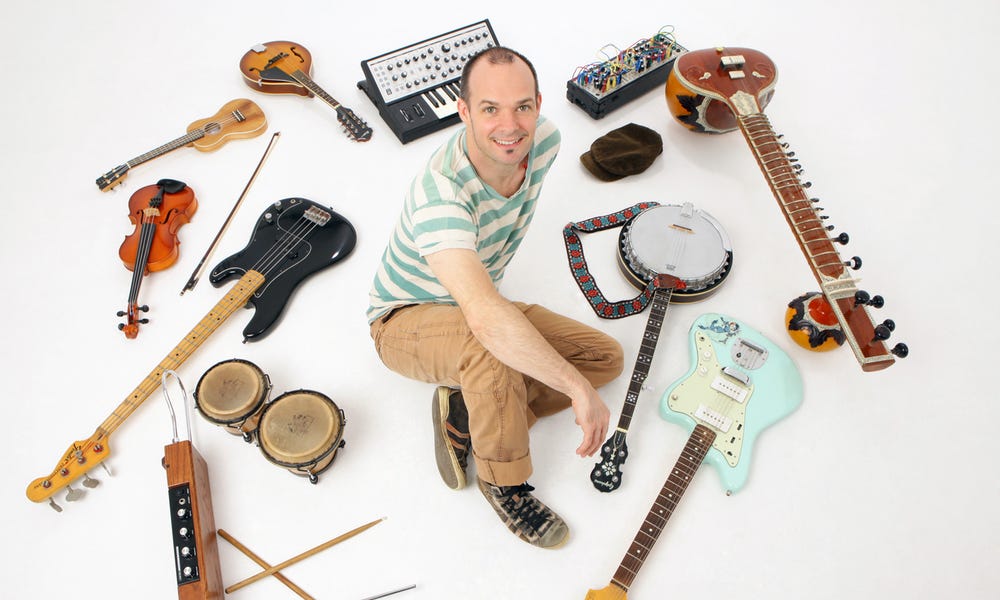
Your instrument becomes much more than something you play.
It becomes a mirror.
Across many traditions, whether they’re spiritual, philosophical or athletic, people rarely begin with the main practice. They first prepare themselves.
Not because the practice needs it.
Because they do.
A prepared mind learns more easily.
A calm mind hears more deeply.
A grateful mind enjoys the journey.
Before you play a single note, try taking one slow breath.
Feel your feet resting on the floor.
Relax your shoulders.
Notice the weight of your hands.
Allow yourself to arrive.
Your goal isn’t to force yourself to relax.
Your goal is simply to become aware.
Then ask yourself one simple question:
Why am I practising today?
Not…
“How good can I become?”
But instead…
“What kind of person do I want to become?”
Perhaps your answer is:
I want to become more patient.
I want to listen more deeply.
I want to enjoy making music.
I want to overcome today’s challenges.
I want to become more present.
I want to create something beautiful.
The intention you bring into your practice often determines what you receive from it.
As you continue, allow your instrument to become your teacher.
A difficult passage teaches patience.
A mistake teaches humility.
A breakthrough teaches perseverance.
A beautiful phrase teaches gratitude.
Music isn’t simply developing skill.
It’s developing character.
When your practice is over, resist the temptation to immediately judge yourself.
Instead of asking,
“Did I play well?”
Try asking yourself:
What did I learn today?
Am I a little more patient?
Am I a little more aware?
Can I bring today’s calmness into the rest of my life?
Then pause for one final breath.
Quietly dedicate your practice.
You might simply say:
May today’s practice help me become a kinder, calmer and more present person, so that the music I make brings something good into the lives of others.
You don’t have to belong to any particular religion or philosophy for these words to have meaning.
They’re simply a reminder that music isn’t only about improving ourselves. Every note we play has the potential to comfort, encourage, inspire or heal another person. When we practise with that intention, our music naturally becomes more generous.
The greatest musicians don’t simply have extraordinary technique.
They have extraordinary presence.
Your scales improve your fingers.
Your songs improve your ears.
Your attention shapes your awareness.
Your intention shapes your character.
And your dedication reminds you that music has always been about more than performance.
It is a way of serving others.
I truly believe this is one of the greatest gifts music has to offer.
🎵 If this way of thinking resonates with you, I’d love to welcome you to the free Mat Creedon School of Music. It’s a community where we explore not only how to play music, but how music can help us become more aware, more creative, and more connected to ourselves and to others.
Join us here:
https://www.skool.com/mat-creedon-school-of-music-4248/about
Just magic, thanks Mat!